

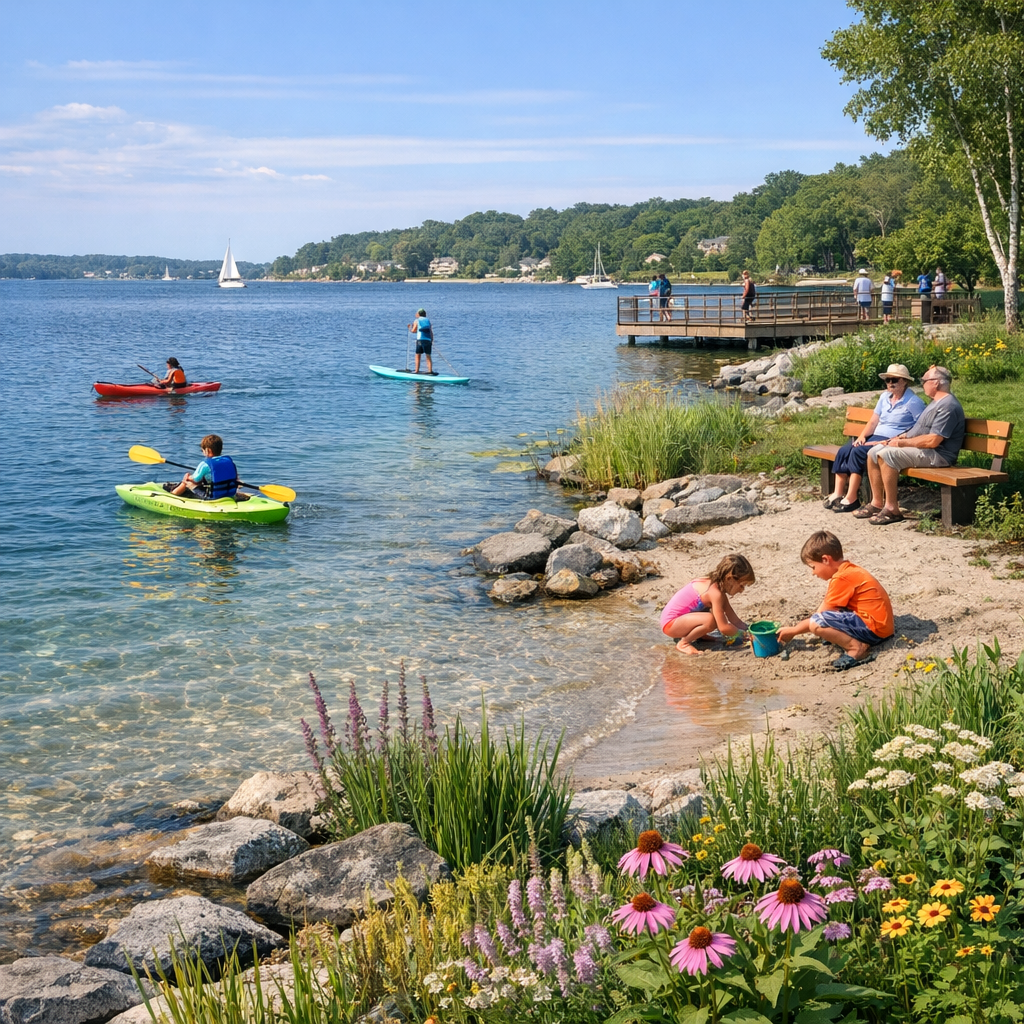
In a landmark achievement for our community, Muskegon Lake has been officially removed from the U.S. Environmental Protection Agency’s (EPA) list of Great Lakes Areas of Concern (AOC). This milestone, effective as of September 26, 2025, signifies the culmination of over three decades of dedicated restoration and cleanup efforts.
Historical Context
Designated as an AOC in 1987, Muskegon Lake faced significant environmental challenges due to industrial discharges, shoreline alterations, and the filling of open water and coastal wetlands. These activities led to contamination with substances such as petroleum hydrocarbons, mercury, lead, and other heavy metals, resulting in degraded water quality and loss of critical habitats.
Restoration Efforts
The journey to restoration involved a collaborative effort among federal, state, and local entities, including the EPA, the Michigan Department of Environment, Great Lakes, and Energy (EGLE), the National Oceanic and Atmospheric Administration (NOAA), and the Muskegon Conservation District. Key initiatives included:
- Remediation of contaminated sediments, notably the $14.1 million cleanup of Ruddiman Creek completed in 2006.
- Restoration of wetlands and shorelines, such as the Lower Muskegon River Habitat Restoration project in 2020, which reestablished hydrological connections and restored over 53 acres of emergent wetlands.
- Removal of nearly 26 acres of sediment and mill debris, creation and softening of 7,000 feet of shoreline, and reestablishment of fish passage.
These efforts were largely funded through the Great Lakes Restoration Initiative and the Great Lakes Legacy Act, demonstrating the power of sustained investment in environmental recovery.
Community and Economic Impact
The restoration of Muskegon Lake has yielded tangible benefits for our community. Residents and visitors are enjoying increased recreational opportunities, including boating, fishing, and shoreline activities. Economic indicators reflect this positive change, with a 19% increase in marina customers and a 45% rise in county hotel room tax collections, highlighting the lake’s revitalization as a catalyst for local economic growth.
Looking Ahead
While the delisting of Muskegon Lake from the AOC list is a cause for celebration, it also serves as a reminder of the importance of ongoing stewardship. Continued monitoring and community engagement are essential to maintain and build upon the progress achieved. The Muskegon Conservation District remains committed to providing technical assistance and promoting sustainable practices to ensure the health of our natural resources.
As we reflect on this significant accomplishment, let us recognize the collective effort that made it possible and reaffirm our commitment to preserving the environmental integrity of Muskegon Lake for generations to come.